Music Therapy and Mental Health: A Safe Way In
For those already familiar with music therapy, its ability to foster connection, expression, and healing is no surprise. But as our understanding of mental health evolves, so too does the scope and depth of music therapy's impact. No longer viewed simply as a complementary practice, music therapy is gaining recognition as an essential component in holistic mental health care.
Whether working with individuals navigating trauma, chronic anxiety, mood disorders, or other neurodivergent experiences, music therapists are uniquely positioned to address emotional and psychological needs through tailored, evidence-informed interventions. In this post, we’ll take a closer look at how music therapy is being integrated into modern mental health frameworks, the latest research supporting its use, and how practitioners are adapting their approaches to meet the complex needs of today’s clients.
Music As a Bridge Toward Security
One of the most powerful things about music therapy in mental health treatment is it’s ability to create emotional safety. If you’ve ever struggled to talk about how you feel, you’re not alone. Many people find traditional therapy hard, especially when words fall short. Music can help bridge that gap.
Whether it’s through songwriting, guided music listening, or simply sharing a favorite song, music can give form to emotions that feel too big—or too unclear—to express. This process can be especially helpful for people dealing with anxiety, depression, trauma, or grief.
A 2020 study in the Journal of Music Therapy found that clients often use music to express feelings they couldn't otherwise verbalize, helping them feel more connected and less isolated (McFerran & Saarikallio, 2020).
Evidence-Based Practice
Music therapy isn’t just "feel-good"—it's backed by science. Brain imaging studies show that music stimulates areas involved in emotion, memory, movement, and even pain perception. This whole-brain activation is part of what makes it such a powerful therapeutic tool.
For example:
A meta-analysis published in World Journal of Psychiatry (2021) found that music therapy significantly reduced symptoms of depression and anxiety across diverse groups.
Another 2022 study in Frontiers in Psychology showed music therapy improved emotional regulation and quality of life in people with PTSD.
The Haukeland University Hospital in Norway participated in a 2023 study that supported music therapy in youth inpatient behavioral health contexts, describing how it promotes treatment compliance and an enhanced relationship between children and their providers.
If you’ve ever wondered whether the benefits of music therapy are “real,” the answer is: yes, and increasingly measurable.
Inclusive and Tailored to You
One of the best things about music therapy is how adaptable it is. No matter your age, background, or musical experience (or lack thereof), the therapy session is shaped to fit you. You don’t need to be a musician, and there’s no pressure to perform or be “good” at music.
Sessions might include:
Listening to music that matches or shifts your mood
Songwriting to tell your story
Exploring your personal playlist or constructing a new one themed around “growth, “courage,” or another that fits where you are on your mental health journey
Learning an instrument like guitar, piano, or drums as a coping skill (even casually)
Music-Assisted Relaxation and exploring mindfulness through sound
Music therapy is also increasingly trauma-informed and culturally responsive. Therapists are trained to honor the musical styles, identities, and histories that matter most to you. It's not about changing your taste—it's about using what resonates most deeply.
Mental Health Music Therapy for Children and Adults
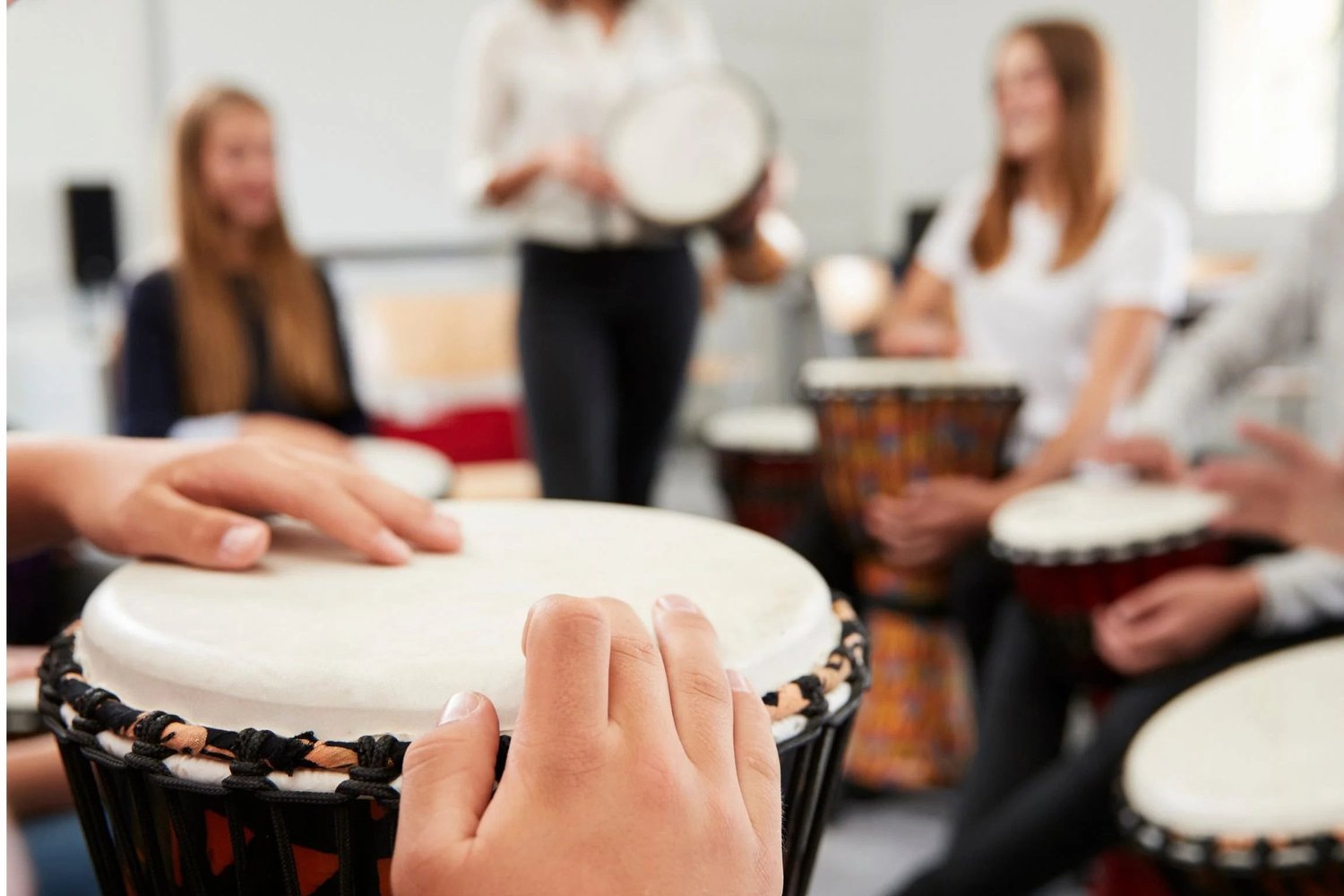
Mental health music therapy serves both adults and children, but its focus and techniques differ to suit each group's unique psychological needs. For children struggling with mental health challenges such as anxiety, ADHD, or trauma, music therapy provides a safe, playful environment where they can express feelings they may not yet have the words to describe. Therapists might use rhythmic drumming to manage hyperactivity or structured musical games to build emotional regulation and social skills. A typical session with a child may include singing familiar songs to create a sense of safety, improvising on instruments to explore feelings, or engaging in musical storytelling to help process difficult experiences. These activities are designed to be fun and non-threatening while supporting emotional growth and communication.
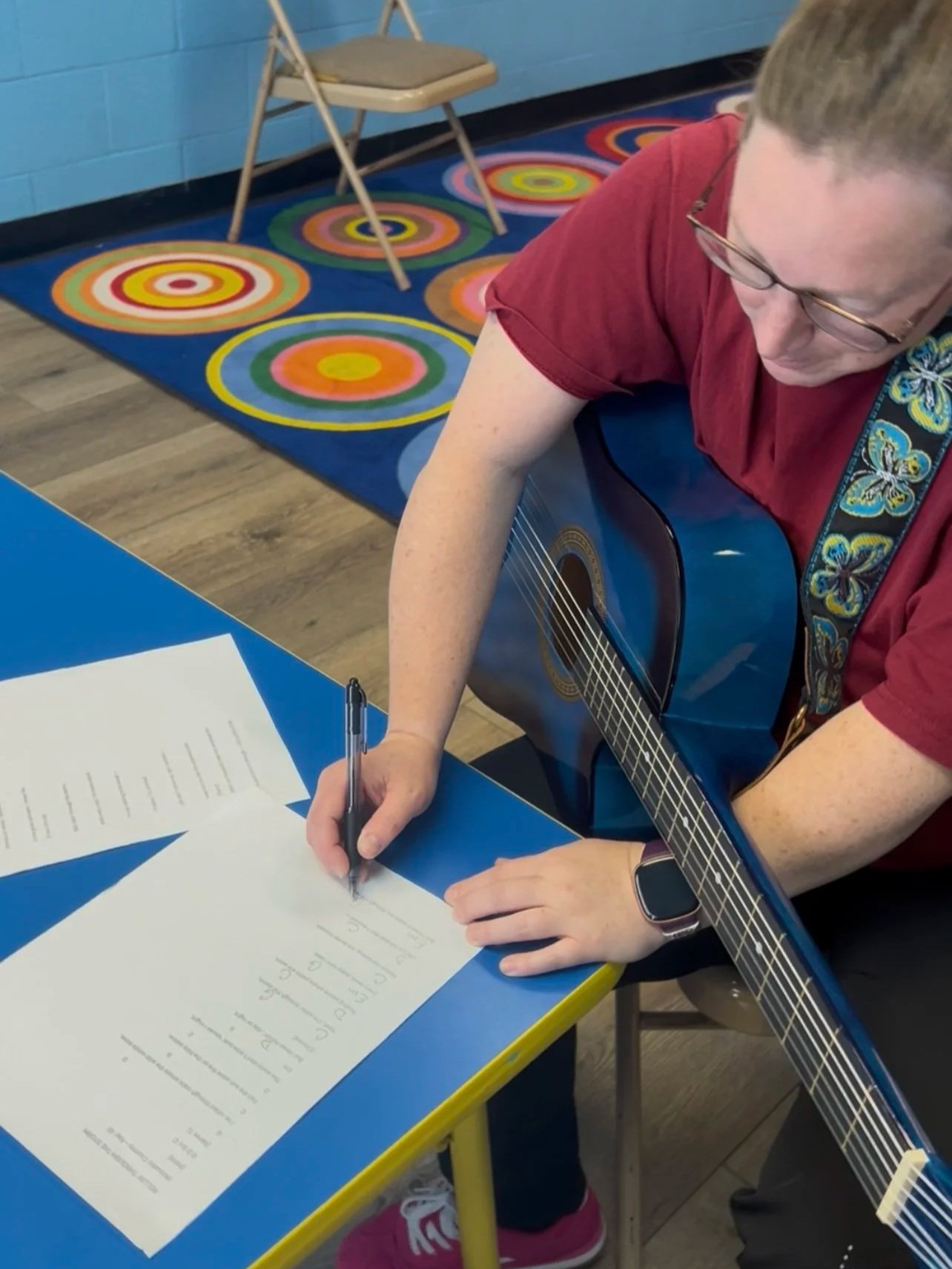
One of Musical Bridge’s clients participating in songwriting
In contrast, music therapy for adults often addresses conditions like depression, PTSD, or chronic stress, using techniques such as lyric analysis, songwriting, or guided music listening to explore complex emotions, process trauma, or reduce symptoms. Adults are typically more able to engage in verbal reflection, so music becomes a bridge to deeper self-awareness and coping strategies. While both children and adults benefit from the therapeutic power of music, the goals and tools are carefully adapted to meet their developmental and mental health needs.
The Power of Music Therapy in Addiction and Recovery
Music therapy can also be a powerful tool in addiction and recovery, offering a nonjudgmental space for individuals to explore emotions, build coping skills, and reconnect with themselves in a meaningful way. Through songwriting, improvisation, or listening to music, clients can process feelings like guilt, grief, and anger—emotions that often surface during recovery. Music also helps reduce cravings, lower anxiety, and support mindfulness, making it a valuable complement to traditional treatment approaches. In group settings, music therapy fosters a strong sense of belonging and shared identity, helping individuals feel connected and supported by others who understand their journey. This sense of community can be a vital source of strength and motivation in the recovery process.
Care Centered Around YOU
If you’re thinking about music therapy, know this: it’s not just about music—it’s about you. About finding your rhythm again. About processing things that may have felt stuck for a long time. And about doing so in a way that feels natural, creative, and personal.
You don’t have to carry everything in silence. Sometimes, the first step to healing isn’t talking—it’s listening. Here at Musical Bridges, we contract with local facilities to provide music therapy services in Addiction and Recovery, and offer one-on-one services for mental health-focused music therapy. If you are interested in mental health music therapy services with Musical Bridges, please reach out to us below. We can’t wait to work with you!
Sources
McFerran, K. S., & Saarikallio, S. (2020). "Depending on music to feel better: Being conscious of responsibility when appropriating the power of music." Journal of Youth Studies.
Aalbers, S., Fusar-Poli, L., Freeman, R. E., Spreen, M., Ket, J. C. F., Vink, A. C., ... & Gold, C. (2017). "Music therapy for mental disorders." Cochrane Database of Systematic Reviews.
Chan, M. F., Wong, Z. Y., & Thayala, N. V. (2011). "The effectiveness of music listening in reducing depressive symptoms in adults: A systematic review." Complementary Therapies in Medicine.
Carr, C., d'Ardenne, P., Sloboda, A., Scott, C., Wang, D., & Priebe, S. (2012). "Group music therapy for patients with persistent post-traumatic stress disorder." Frontiers in Psychology.
World Journal of Psychiatry (2021). "Music therapy for depression and anxiety: A systematic review."
Klyve G., Rolvsjord R., & Elgen I. (2023). “Polyphonic perspectives: a focus group study of interprofessional staff’s perceptions of music therapy at an inpatient unit for children in mental health care.” International Journal of Qualitative Studies on Health and Well-Being.