
Neurologic Music Therapy®
Music Therapy Goals, What Should They Be?

Welcome back! Today, we are pulling back the curtain on what to expect from a therapeutic goal in Music Therapy.
When creating goals for our clients, we consider a wide range of information. We look at insights from families, other therapists working with the client, and even school or medical reports. We combine this external information with data gleaned from our own specialized intake forms and intake assessment sessions.
At Musical Bridges, your goals are taken further and deeper than typical music therapy goals, as they are specifically curated with Neurologic Music Therapy® (NMT) techniques in mind. This allows client goals to be easily tracked and streamlined into visible, objective data.
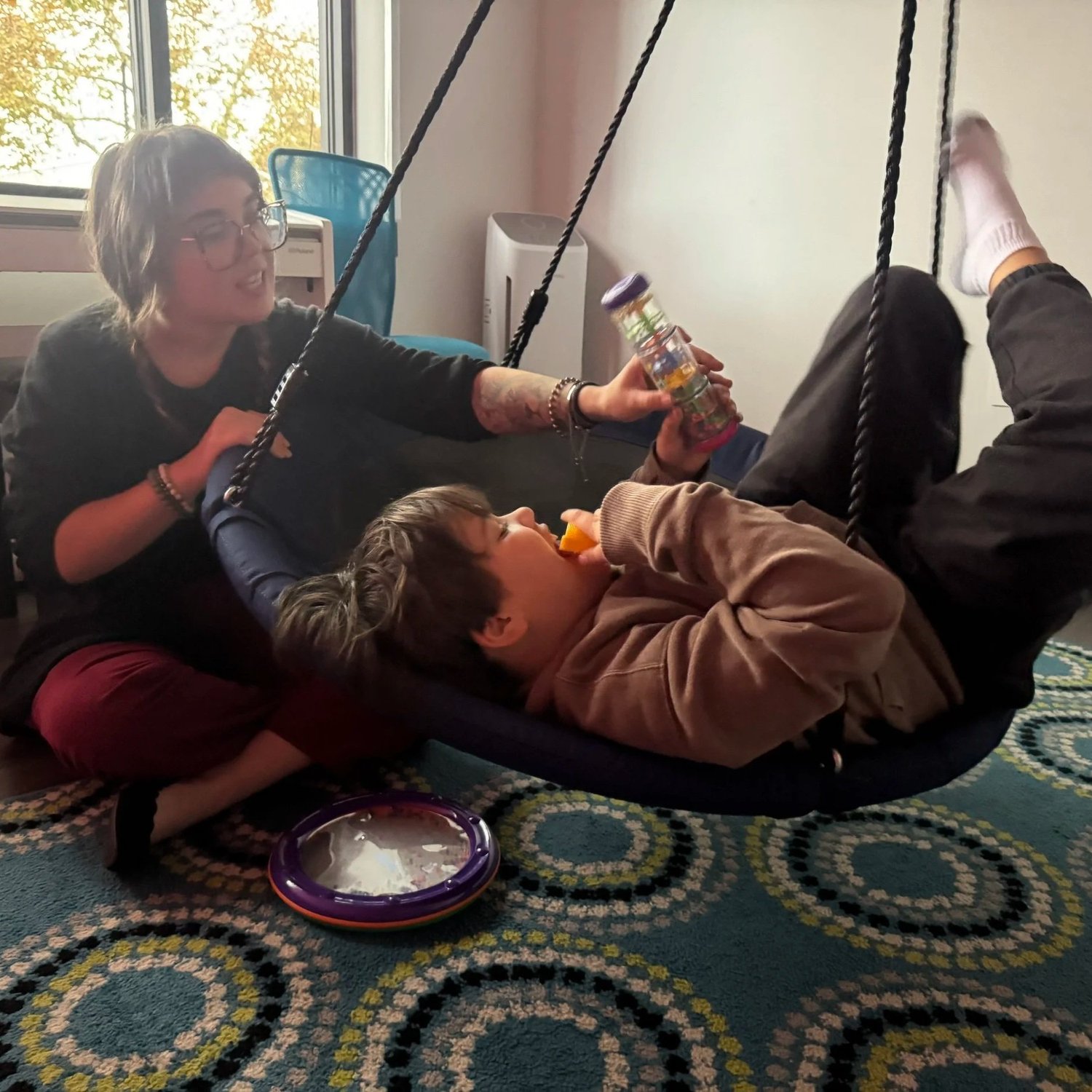
Our therapists are well trained and versed in creating specific individualized goals that are realistic and beneficial to our clients.
How do we know what goals to work towards?
When you attend your first music therapy session, an initial assessment will take place. We will evaluate your greatest areas of strength and areas of need, then create an Assessment Report and Treatment Plan. This document includes everything you and your caregivers want to address, as well as clinical observations noted by your music therapist.
At the conclusion of this document will be a list of one to five goals. Each goal is tailored individually to the client and will feature at least one specific Neurologic Music Therapy® technique listed alongside it. We do this for a few key reasons:
A Strategic Roadmap: It gives the therapist a clear reference point to design all future musical interventions.
Team Collaboration: Any other therapists on your child’s team (like PTs, OTs, or SLPs) can look at our documentation and understand exactly how the goal is being addressed.
In-Sync Care: For example, a client is working on physical coordination in OT or vocabulary in Speech Therapy, we can design our musical interventions to target those exact same physiological and linguistic neural pathways.
Targeted Care: It ensures that every single goal area is being addressed appropriately and scientifically.
What are these goals, and why do we have them?
Music therapy is an evidence-based profession, meaning everything we do is backed by clinical research. Because of this, it is quite different from recreational music-making.
Think of it like the difference between going for a casual run and visiting a physical therapist. While going for a run is great for your body, a physical therapist provides a series of targeted exercises to work on a specific muscle or joint that needs extra attention. Those exercises are tailored to your body and backed by years of research.
Similarly, as Neurologic Music Therapists®, our goals are always created with "transfer to real life" in mind.
Because the ultimate objective is to improve your daily life, our clinical goals are almost never musical in nature. We aren't testing a client's ability to hold a rhythm or sing on pitch for the sake of the music itself; we are using music as a tool to improve functional, everyday skills like walking, talking, processing emotions, or focusing.
The Only Exceptions: Leisure, Relaxation, and Coping
The only time a strictly musical goal will be introduced into a treatment plan is when it regards a client's coping, relaxation, or leisure skills. Examples of this include:
Learning an instrument to build a sustainable, life-long leisure skill.
Actively creating a curated playlist specifically designed for stress management and relaxation.
In these specific instances, the music itself becomes the functional tool for emotional regulation and independent living.

So, what does a good music therapy goal look like?
To ensure our goals are functional, attainable, and measurable, we follow the tried-and-true SMART outline:
S – Specific: The goal is clear and understandable, outlining exactly what expectation needs to be met.
M – Measurable: This ensures that progress can be tracked and seen mathematically, proving that music therapy is truly working for you.
A – Achievable (Attainable): The goal is realistic and something the individual can genuinely achieve.
R – Relevant: The goal directly benefits the individual and addresses a skill that matters to their daily life.
T – Time-Bound: The goal has parameters for when it is expected to be completed—whether that is a specific number of sessions, a set date, or a targeted number of months. A time-bound goal turns a vague "someday" into a tangible reality.
The Power of Objectives
Beneath each goal, you will find a series of smaller objectives. These objectives are also measurable and will gradually increase in difficulty as the client moves toward the main goal's target date. Objectives keep both the therapist and the client accountable, and they serve as checkpoints to let us know if a goal needs to be adjusted.
Sometimes goals need to be tweaked as we learn more about a client, and that is completely okay! In fact, that is the most important reason for having clear goals and objectives; we cannot properly serve you if we don't have a reliable way to see if a treatment is working.
What happens when a goal is met?
Our greatest hope is to see our clients meet and exceed their goals! When that happens, it is one of our favorite parts of being music therapists; we love celebrating our clients' hard work and achievements.
But meeting a goal doesn't mean your music therapy journey has to end. New goals can always be set, and we are excited to continue growing right alongside you.
What about you? If you could choose one daily-life skill (like transitions, speech clarity, or fine motor control) that you’d love to see made easier through the power of music, what would it be? Let us know in the comments below!