
Finding Your Rhythm: Why We Don’t Believe in "One-Size-Fits-All" Music Therapy
When you walk into a session at Musical Bridges, you might see a highly structured environment with visual schedules and a token economy. In the very next room, you might see a completely unstructured, play-based session where the client is leading the musical exploration, and the therapist is following their every move.
To an outside observer, it might look like two entirely different clinics. But to us, it is exactly what music therapy should be: entirely adaptable to the individual in front of us.
At Musical Bridges, our foundation is deeply rooted in the science of Neurologic Music Therapy® (NMT). We understand the neuroscience behind how the brain perceives and produces music. But science is only half of the equation. The other half is the human element, which is why our overarching philosophy is play-based and client-led. We strongly believe that forcing our own clinical preferences onto a family or a client doesn't serve anyone. Instead, we adapt to you.
The Flexibility of Care
Many therapy practices subscribe to one strict modality or worldview, asking the client to mold to the therapy. We take the opposite approach: the therapy must mold to the client. We are not selfish in what we prefer. Our therapists are trained in a wide array of techniques—from Gestalt Language Processing and Nordoff Robbins improvisation to behavioral techniques—so that we can be exactly what your family needs.
For Those Who Need Structure
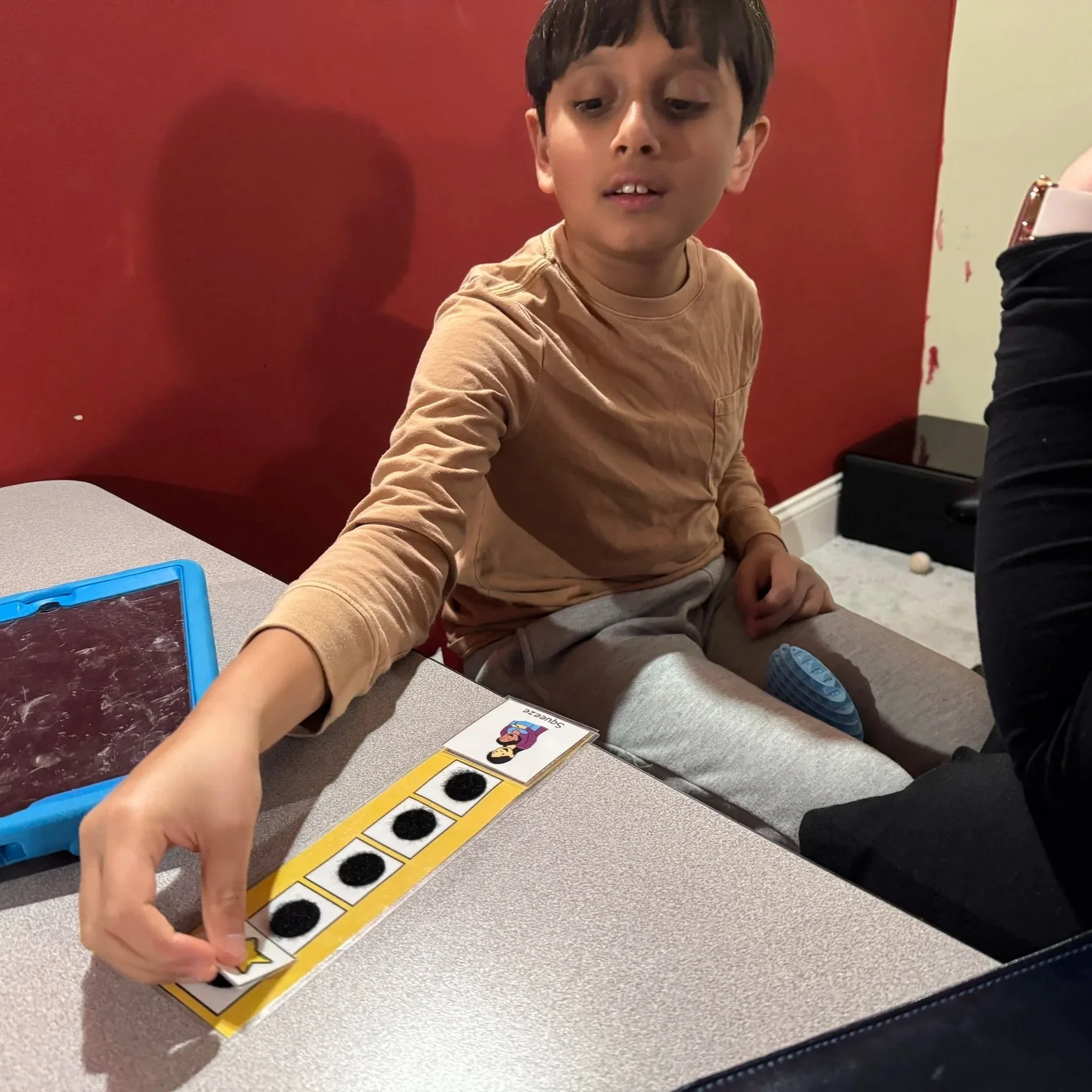
For many of our clients, particularly those who are dual-enrolled in ABA therapy, predictability and structure are where they feel safest and most capable of learning. For these families, we are more than happy to utilize a behavioral approach. We can incorporate visual schedules, "first/then" boards, and individual token economies to provide clear expectations and celebrate milestones. We collaborate with your other providers to ensure we are reinforcing the same goals in a way that makes sense to the client.
For Those Seeking a Neuro-Affirming Path
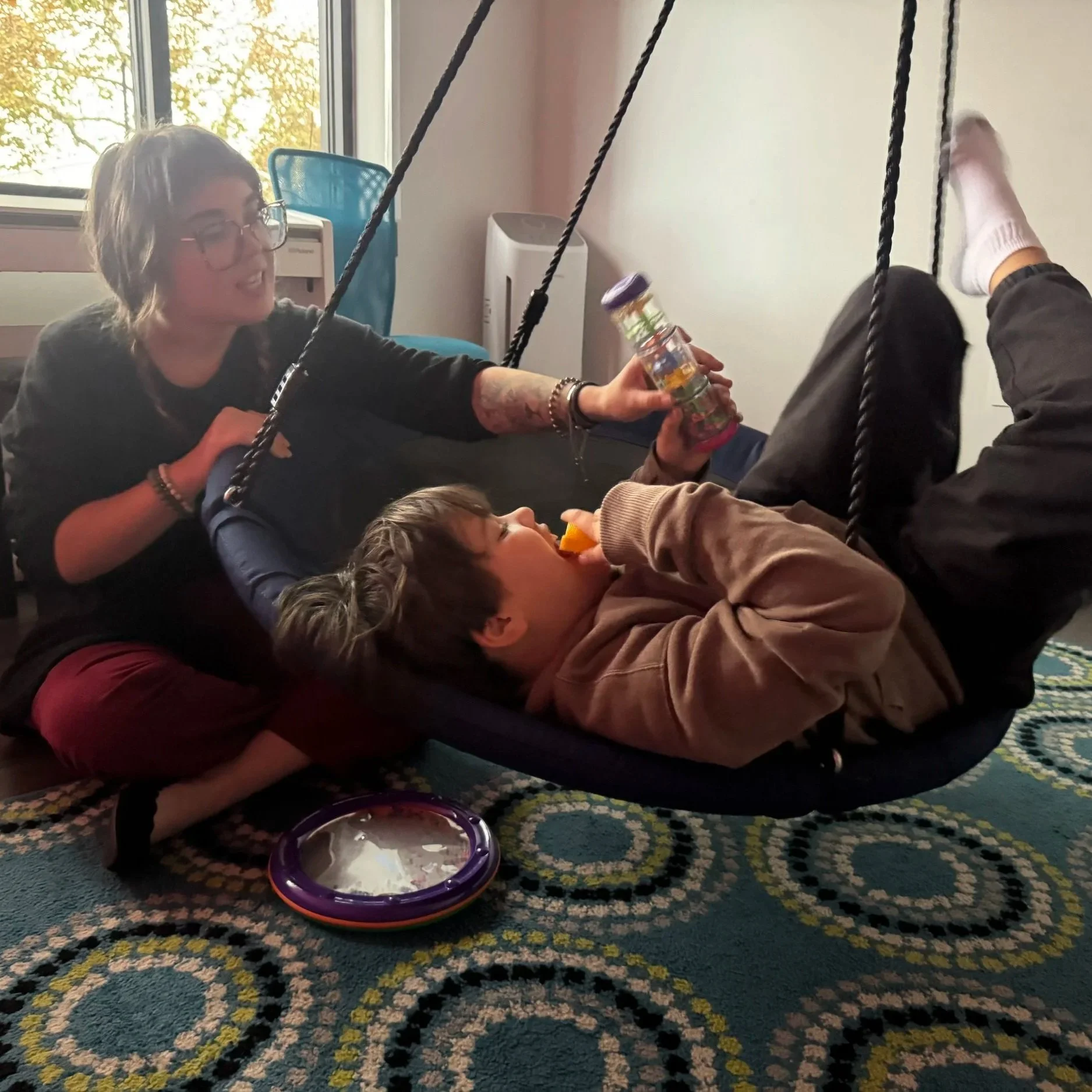
For other clients, a behavioral approach simply isn't the right fit. In these cases, we completely step away from that model and follow a deeply neuro-affirming pathway. We embrace the way the client naturally interacts with the world, abandoning strict compliance-based structures in favor of sensory regulation, emotional expression, and autonomy. If a client needs to spend the session in a swing with dimmable lights, exploring a cabasa or an ocean drum on their own terms, we meet them exactly where they are.
Led by Clients, Guided by Caregivers
Because we prioritize live instruments and vocals over pre-recorded tracks, our therapists have the ultimate flexibility. We can slow down a tempo the second a client needs more processing time, or change the lyrics of a familiar song on the fly to support a new goal.
But our most important collaborators aren't our instruments—they are the clients and their caregivers. We value parent and caregiver feedback above all else because you know your loved one best. If your child is able to relay their preferences, they become the director of the session. If they cannot, we rely on your expertise to guide our approach.
At Musical Bridges, we don't have a single "style" because we don't have a single type of client. Whether we are providing high structure or following a neuro-affirming flow, our ultimate goal remains the same: using the power of music to help our clients connect, grow, and thrive on their own terms.
Interested in learning how music therapy can support your loved one? Contact us today!