Music Lessons
Voice Lessons for Children: Cognitive, Social, and Emotional Growth

Voice lessons offer children much more than just the ability to sing in tune. They foster emotional intelligence, cognitive development, communication skills, and self-confidence. For children with disabilities, voice training can be especially transformative—supporting language development, social engagement, and even neurological growth.
How Voice Lessons Support Child Development
Language, Memory, and Cognitive Skills
Voice lessons engage both the brain and body. Singing involves decoding language, recognizing pitch and rhythm, and synchronizing breath and vocal control—all of which activate multiple brain regions:
Phonological awareness: Research shows that vocal training improves a child’s ability to hear and manipulate sounds in language—a key skill for reading. A study by Gordon et al. (2015) found that rhythmic vocal exercises improved phonemic awareness in young children, including those at risk for reading disorders.
Memory and attention: Singing exercises verbal memory by requiring recall of lyrics, melody, and musical phrasing. This improves attention span and working memory—foundational for academic success.
Speech development: Articulation and diction work in voice lessons directly supports clearer speech. Voice teachers often incorporate vowel shaping, breath control, and pacing, which parallel methods used in speech therapy.
Reference: Gordon, S., et al. (2015). Music training and phonological awareness in preschoolers. "Frontiers in Psychology."
Communication & Confidence
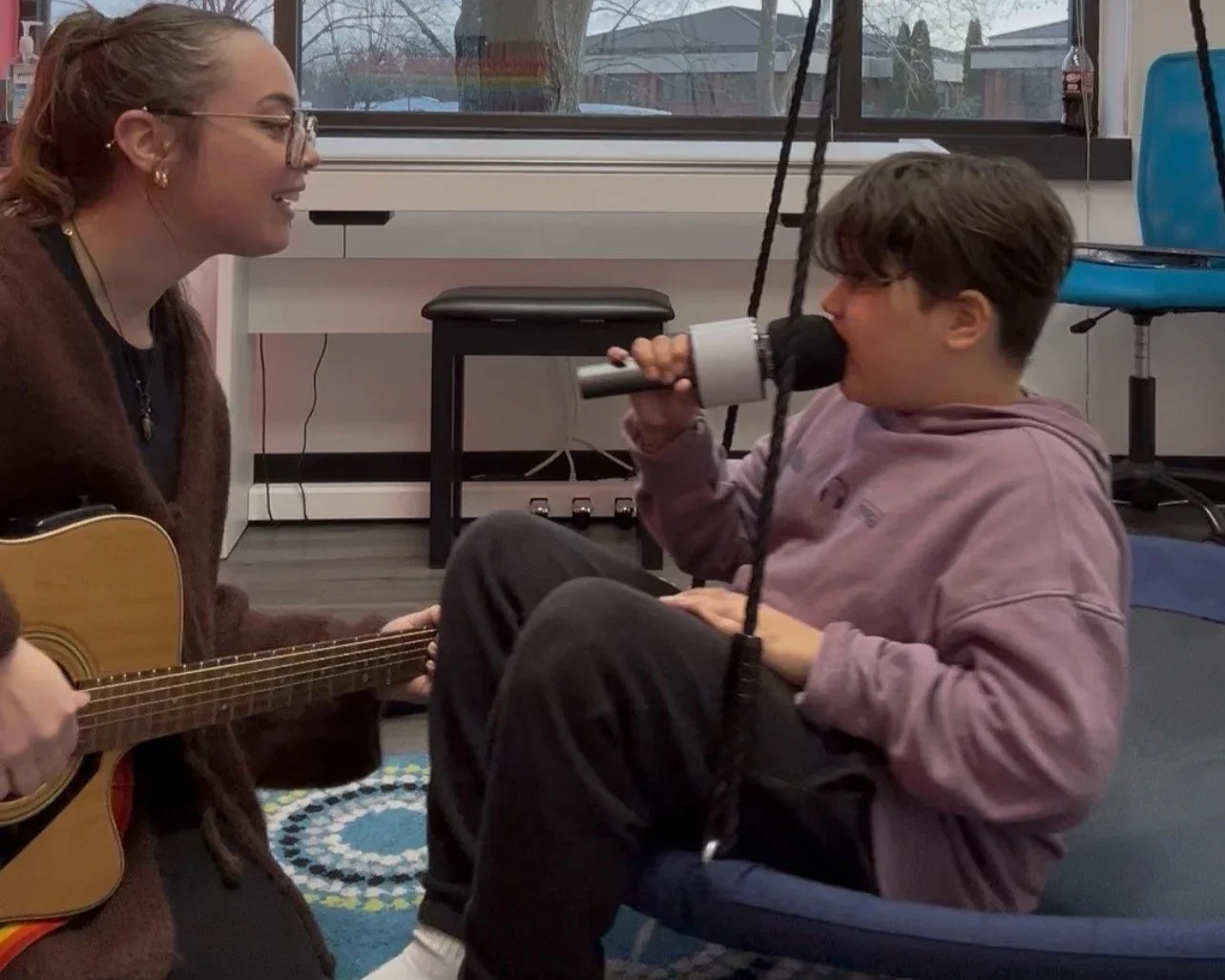
One of the most immediate benefits of singing is self-expression. Voice lessons provide a structured, encouraging space for children to find their voice—literally and metaphorically.
Confidence building: Performing a song builds a sense of personal accomplishment. Over time, students become more comfortable with public speaking, presenting, and taking initiative.
Non-verbal expression: Vocal tone, phrasing, and dynamics allow children to explore emotional nuance and storytelling—skills that enhance social and emotional development.
Voice Lessons for Children with Disabilities
Voice instruction—when tailored thoughtfully—can be profoundly beneficial for children with disabilities. From language acquisition to emotional expression, the voice becomes both an instrument and a tool for connection.
Language Development & Auditory Processing
For children who are deaf or hard of hearing:
A study by Looi et al. (2012) found that deaf children with cochlear implants who participated in weekly vocal training improved in auditory discrimination, speech perception, and phoneme recognition—skills critical for understanding and producing spoken language.
Pitch-matching and vocalization exercises help cochlear implant users refine their perception of tone and rhythm, improving both speech clarity and expressiveness.
Reference: Looi, V., et al. (2012). Music perception of cochlear implant users and its implications for music teaching. "International Journal of Music Education."
For children with speech and language delays:
Voice training can help improve articulation, breath support, and prosody (intonation and stress in speech). These elements are often disrupted in children with developmental speech disorders.
Melodic Intonation Therapy (MIT)—a technique that uses melodic and rhythmic vocalization—has been shown to activate alternative language pathways in children with apraxia and non-verbal autism.
Reference: Zumbansen, A., et al. (2014). The therapeutic use of singing in neurological disorders. "Annals of the New York Academy of Sciences."

Autism Spectrum Disorder (ASD), Down Syndrome, and Related Conditions
Children with ASD often exhibit challenges in social communication—but many respond strongly to vocal music. Singing can act as a bridge for communication, providing predictable structure and emotional nuance that spoken language may lack.
Studies show that singing-based instruction improves joint attention, imitation skills, and expressive language in children with ASD. One reason: vocal patterns are easier to remember and imitate than spoken phrases.
For children with Down syndrome, vocal exercises support breath control and muscle tone in the vocal tract—helping improve speech clarity and projection.
Reference: Geretsegger, M., et al. (2014). Music therapy for people with autism spectrum disorder. "Cochrane Database of Systematic Reviews."

Emotional Expression and Well-Being
Children with disabilities often experience emotional frustration when unable to express themselves verbally. Singing offers a powerful outlet.
Voice teachers trained in inclusive education often use emotion-centered singing—selecting repertoire that reflects a child's feelings or identity, encouraging self-expression and emotional literacy.
In structured lessons, the simple act of being heard and responded to—vocally—can build trust, reduce anxiety, and create a safe space for self-discovery.
Reference: Reschke-Hernández, A. E. (2011). History of music therapy treatment interventions for children with autism. "Journal of Music Therapy."
Conclusion
Voice lessons offer children a unique path to growth—not only as singers but as learners, communicators, and emotionally intelligent individuals.
For all children, voice lessons offer:
Stronger language and memory skills
Boosted confidence and self-expression
Social connection and collaborative learning
Vocal health and communication clarity
For children with disabilities, voice training can offer:
Improved auditory and speech processing (especially in deaf/CI-using children)
Enhanced articulation, breath control, and verbal expression
Emotional release and increased engagement in social interaction
A bridge to connection when words fall short
By making voice lessons accessible and adaptive, we empower every child to find—and use—their voice.